
Whether you are visiting a Notary Public for the first time or need clarification on a specific issue, this comprehensive FAQ answers the 100 most common questions about notary services in Cork. From costs and appointments to apostilles and Powers of Attorney — everything you need to know in one place.
General Questions About Notary Services
1. What is a Notary Public?
A Notary Public is a legal professional appointed by the Chief Justice of Ireland to authenticate documents for international use. Their seal and signature are recognised worldwide.
2. What does a Notary Public do?
Notaries witness signatures, certify copies of documents, administer oaths and affirmations, prepare notarial acts, and authenticate documents so they can be used in other countries.
3. How is a Notary Public appointed in Ireland?
By the Chief Justice of Ireland, following a petition process. The appointment is for life. Candidates must hold the Diploma in Notarial Law and Practice.
4. Is a Notary Public the same as a Solicitor?
No. While most Irish Notaries are also qualified Solicitors, the two are separate roles. A Solicitor provides general legal services; a Notary Public specifically authenticates documents for international use. Not all Solicitors are Notaries.
5. Is a Notary Public the same as a Commissioner for Oaths?
No. A Commissioner for Oaths can witness oaths for domestic Irish use. A Notary Public has broader, internationally recognised powers. For documents going abroad, only a Notary Public will suffice.
6. How many Notaries Public are there in Cork?
The number is limited, as appointments are controlled by the Chief Justice. There are only a small number of practising Notaries in the Cork area.
7. Where is Hugh Phelan's office?
East Douglas Street, Douglas, Co. Cork.
8. What are Hugh Phelan's qualifications?
BCL from University College Cork, Diploma in Notarial Law, dual-qualified in Ireland and England & Wales, appointed as Notary Public by the Chief Justice of Ireland.
9. Do I need an appointment?
Yes, an appointment is recommended to ensure sufficient time is allocated. Same-day appointments are often available — call 021-489-7134.
10. Can I get a same-day appointment?
Often, yes. Contact the office as early as possible for the best availability.
Costs and Fees
11. How much does notarisation cost?
Fees vary depending on document type and complexity — contact Hugh Phelan's office on (021) 489 7134 for a specific quote. Multiple documents in one appointment often attract a reduced per-document rate.
12. Is there a discount for multiple documents?
Yes. Multiple documents handled in a single appointment often attract a reduced per-document rate.
13. How much does an apostille cost?
€40 per document, charged by the Department of Foreign Affairs. This is separate from the notarisation fee.
14. Do I pay the apostille fee to the Notary?
No. The apostille fee is paid directly to the Department of Foreign Affairs when you submit the document.
15. What payment methods are accepted?
Contact the office for current payment methods.
Watch: Hugh Phelan — Notary Public, Douglas, Cork
What to Bring
16. What do I need to bring to my appointment?
Valid photo ID (passport preferred), the original documents you need notarised, and any instructions from the requesting foreign institution.
17. Do I need to bring the original document?
Yes. The Notary needs to see the original to certify that a copy is a true copy, or to witness your signature on the original.
18. Can someone else bring my documents?
For certified copies, the document owner does not always need to be present. For witnessed signatures, the person signing must appear in person before the Notary.
19. Do I need to bring a witness?
Not usually. The Notary acts as the witness. If additional witnesses are required by the destination country, the Notary will advise.
20. What if I don't have photo ID?
A valid passport is preferred. In some cases, a driving licence with photograph may be acceptable. Contact the office in advance if you have concerns about identification.
Apostille Questions
21. What is an apostille?
A certificate from the Department of Foreign Affairs that authenticates the notary's signature and seal, allowing the document to be accepted in countries party to the Hague Convention.
22. Where do I get an apostille?
Department of Foreign Affairs, Iveagh House, 80 St. Stephen's Green, Dublin 2. Available in person (same day) or by post (3–5 working days).
23. Can the Notary get the apostille for me?
The Notary notarises the document; the apostille is obtained separately from the Department of Foreign Affairs. The Notary can advise on the process.
24. How long does an apostille take?
Same day if you visit the Dublin office in person. 3–5 working days if sent by post.
25. Does my country accept apostilles?
Over 125 countries accept apostilles. Check the Hague Conference on Private International Law website for the full list.
26. What if my country is not in the Hague Convention?
You will need full consular legalisation — a longer process involving the Department of Foreign Affairs and the relevant embassy.
27. Can I get an apostille without notarisation?
Public documents issued by Irish government bodies (birth certificates from GRO, court orders) can go directly for apostille. Private documents must be notarised first.
28. Does the apostille expire?
The apostille itself does not expire. However, some receiving countries require documents to have been issued within a specific timeframe (e.g., 3 or 6 months).
29. Can I get an apostille in Cork?
No. Apostilles are only issued by the Department of Foreign Affairs in Dublin. You can submit by post from Cork.
30. How much does an apostille cost?
€40 per document.
Powers of Attorney
31. What is a Power of Attorney?
A legal document authorising someone to act on your behalf in specified legal, financial, or property matters.
32. What types of Power of Attorney are there?
General (broad authority), Specific (limited to a particular transaction), and Enduring (continues if you lose mental capacity).
33. Do I need a Power of Attorney if I'm moving abroad?
It is strongly recommended. A PoA allows someone in Ireland to manage your property, banking, and legal affairs.
34. Can a Power of Attorney be used in another country?
Yes, if notarised and apostilled (and translated if required). Always check the specific requirements of the destination country.
35. What is an Enduring Power of Attorney?
A PoA that continues to be effective if you lose mental capacity. It must involve a solicitor and a medical practitioner, and be registered with the Decision Support Service.
36. Can I revoke a Power of Attorney?
Yes. A General or Specific PoA can be revoked at any time while you have mental capacity. An Enduring PoA can be revoked before registration; after registration, revocation requires a court application.
37. Does the person I appoint have to be in Ireland?
Not necessarily. However, the attorney needs to be practically able to carry out the powers granted (e.g., attend a bank, sign documents).
38. How much does a Power of Attorney cost?
Costs vary depending on the type and complexity of the Power of Attorney. Contact Hugh Phelan's office on (021) 489 7134 for a specific quote.
39. Does the destination country need to approve the wording?
Often, yes. Many foreign authorities have specific wording requirements. Always obtain these before having the PoA prepared.
40. Can Hugh Phelan prepare a Power of Attorney for use in Spain/Italy/UAE etc.?
Yes. Hugh Phelan regularly prepares Powers of Attorney for use in countries worldwide and can advise on country-specific requirements.
Certified Copies
41. What is a certified copy?
A copy of an original document that has been verified as a true copy by an authorised person.
42. When do I need a notarised copy vs a solicitor-certified copy?
For domestic Irish use: a solicitor's certification is usually sufficient. For international use: you need a notarised copy.
43. Can I get a notarised copy of my passport?
Yes. This is one of the most common notarial services.
44. Can I get a notarised copy of my degree?
Yes. Bring the original degree certificate and the Notary will prepare a notarised copy.
45. How many copies can be notarised at once?
As many as you need. Multiple copies in one appointment often attract a reduced per-document rate.
Documents for Specific Countries
46. What documents do I need for Spain?
See our detailed Spain checklist.
47. What documents do I need for Australia?
See our Australia checklist.
48. What documents do I need for the USA?
See our USA checklist.
49. What documents do I need for Canada?
See our Canada checklist.
50. What documents do I need for the UAE?
See our UAE checklist.
51. What documents do I need for the UK?
See our UK checklist.
52. Does Canada now accept apostilles?
Yes. Canada acceded to the Hague Convention, effective 11 January 2024.
53. Does the UAE now accept apostilles?
Yes. The UAE acceded to the Hague Convention, effective 28 June 2023. However, some UAE institutions may still require additional attestation.
54. Do I need an apostille for the UK?
The UK accepts apostilles. However, under the Common Travel Area, many Irish documents are accepted in the UK without apostille. Check with the specific institution.
55. What about documents for China?
China is not currently a member of the Hague Convention. Documents need full consular legalisation through the Chinese Embassy in Dublin.
Marriage Abroad
56. What documents do I need to get married abroad?
See our getting married abroad checklist.
57. What is a Certificate of Freedom to Marry?
A document confirming you are legally free to marry. Obtained from the civil registration service. Also called Certificate of No Impediment or Nulla Osta.
58. Can Hugh Phelan prepare a Certificat de Coutume for France?
Yes. This certificate explains Irish marriage law to French authorities and is commonly required for marriages in France.
59. Is a foreign marriage recognised in Ireland?
Generally, yes — provided it was legally valid where it took place and both parties had capacity to marry under Irish law.
60. Do I need to register my foreign marriage in Ireland?
Not necessarily. A legally valid foreign marriage is recognised in Ireland. However, having a notarised copy of the foreign marriage certificate is advisable.
Property Abroad
61. Do I need a notary for buying property abroad?
Almost always. Most countries require notarised Powers of Attorney, identity documents, and financial proofs for property transactions.
62. Can I buy property abroad without visiting the country?
In many cases, yes — using a notarised Power of Attorney that authorises someone to act on your behalf.
63. What is a Procura?
The Italian term for Power of Attorney, commonly required for property purchases in Italy.
64. Does the Power of Attorney for property need specific wording?
Usually, yes. Obtain the required wording from the foreign notary or solicitor before having the PoA prepared in Ireland.
65. Do I need a marital status declaration for property abroad?
Some countries (notably Italy, Spain, France) require this because their matrimonial property laws differ from Ireland's.
Business and Corporate
66. Can a Notary notarise company documents?
Yes. Certificates of Incorporation, Memorandum and Articles, board resolutions, and director identification are all commonly notarised.
67. What corporate documents do I need for an international bank account?
Typically: Certificate of Incorporation, Memorandum and Articles, board resolution, director ID, and beneficial owner identification — all notarised. See our international business checklist.
68. Can a Notary certify a Certificate of Good Standing?
A Certificate of Good Standing from the CRO is a public document that can go directly for apostille. However, the Notary can certify copies and notarise related company documents.
69. Do I need notarised documents for international tenders?
Some international tenders require notarised company profiles, financial statements, and director declarations.
70. Can a Notary witness a board resolution?
Yes. The Notary can witness the signing of a board resolution and certify it for international use.
Education and Employment
71. Do I need my degree notarised for use abroad?
Usually, yes. Most countries require notarised copies of educational qualifications for immigration, employment, and professional registration.
72. Do employment references need notarisation?
For immigration applications to many countries (Australia, Canada, UAE), yes.
73. Can the Notary certify transcripts?
Yes. Bring the original transcript and the Notary will prepare a notarised copy.
74. What about professional registration certificates?
Yes. Medical Council registration, NMBI registration, Engineering Council membership — all can be notarised.
75. Do I need a skills assessment for Australia or Canada?
Yes, for skilled migration. Notarised copies of qualifications and references are needed. See our Australia and Canada checklists.
Process and Logistics
76. How long does notarisation take?
A simple notarisation can be completed in 15–30 minutes. Complex documents or multiple documents may take longer.
77. Can I get documents notarised outside business hours?
Contact the office to discuss — special arrangements may be possible.
78. Can the Notary come to my office or home?
In some circumstances, a Notary may attend at your location. Contact the office to discuss.
79. What if I need documents notarised urgently?
Contact the office as soon as possible. Same-day appointments are often available.
80. Can I get documents notarised online?
Not in Ireland. Irish law requires notarisation to be performed in person.
81. Do I need to sign the document in front of the Notary?
If the notarisation involves witnessing your signature, yes — you must sign in the Notary's presence.
82. What happens during the appointment?
The Notary verifies your identity, examines the documents, explains what the notarisation involves, witnesses your signature or certifies copies, prepares a notarial certificate, applies the seal, and records the transaction in the protocol.
83. What is the notarial protocol?
A permanent register of all notarial acts performed, maintained by the Notary throughout their career.
84. What if I lose my notarised document?
The Notary's protocol contains a record of the transaction. Contact the Notary's office to discuss whether a replacement can be issued.
85. Can the Notary refuse to notarise a document?
Yes. A Notary must refuse if they believe the document is fraudulent, the person lacks capacity, or there is evidence of coercion or illegality.
Translation
86. Does the Notary translate documents?
No. Notarisation and translation are separate services. You will need a sworn or certified translator for the language of the destination country.
87. Does the translation need to be notarised?
Some countries require the translation itself to be notarised. Check with the destination country's requirements.
88. Can the Notary recommend a translator?
Yes. The Notary can advise on translation requirements and may be able to recommend reputable translators.
89. Should I get the document translated before or after notarisation?
Usually after. The standard chain is: original document → notarisation → apostille → translation. Some countries have different requirements.
90. What is a sworn translation?
A translation certified by a translator officially registered or recognised by the destination country's authorities as accurate and complete.
Miscellaneous
91. Can a Notary certify a digital document?
A Notary can produce a certified printout of digital content (website, email) confirming what was displayed at a specific date and time.
92. Do I need a Notary for adoption documents?
International adoptions typically require notarised documents — home study reports, financial declarations, police clearances, and identity documents.
93. Do I need a Notary for a name change?
For a deed poll to be used abroad, notarisation and apostille are typically required.
94. Can a Notary certify documents in languages other than English?
A Notary can certify that a document exists and was presented, even if it is in another language. They may need a translation to understand the content before certifying.
95. What is consular legalisation?
The process of authenticating a document through a foreign embassy, required for countries not party to the Hague Convention. Slower and more complex than apostille.
96. What is the Hague Convention?
The Convention of 5 October 1961 that simplified the international use of public documents by creating the apostille system. Over 125 countries are members.
97. Can I use a UK-notarised document in Ireland?
It depends on the purpose. For some uses, a UK notarised document will be accepted; for others, Irish notarisation may be required. Consult the requesting institution.
98. Is Hugh Phelan qualified in England & Wales as well as Ireland?
Yes. Hugh Phelan is dual-qualified in both jurisdictions, which is advantageous for cross-border matters.
99. Can I book an appointment online?
Yes. Visit corknotarypublic.co/pages/book-appointment.html to book online.
100. How do I contact Hugh Phelan?
Phone: 021-489-7134 | Email: info@phelansolicitors.com | Office: East Douglas Street, Douglas, Co. Cork.
📚 Related Guides
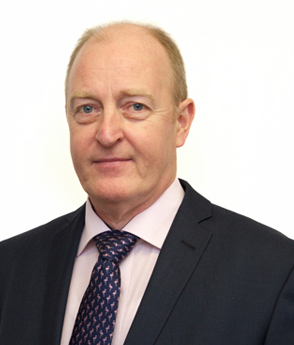
Hugh Phelan — Notary Public Cork
Solicitor & Notary Public appointed by the Chief Justice of Ireland. Over 20 years' experience. BCL (UCC), dual-qualified Ireland & England/Wales.
📍 Notary Public Cork — Hugh Phelan
Need a Notary Public in Cork? Hugh Phelan is a Solicitor & Notary Public appointed by the Chief Justice of Ireland, based at East Douglas Street, Douglas, Cork. Same-day appointments available.
Have a Question Not Listed Here?
Contact Hugh Phelan — Solicitor & Notary Public, East Douglas Street, Douglas, Cork.
Book Your Appointment📞 +353-21-489-7134 · East Douglas Street, Douglas, Cork
Also see: Notary Services Cork