Most people only encounter a Notary Public when they need one — and even then, they may not fully understand what a notary does or why the profession exists. Here are ten things about notary services in Ireland that might surprise you.
1. The Profession Is Over 2,000 Years Old
The notarial profession traces its origins to ancient Rome, where scribes called notarii recorded public proceedings and prepared legal documents. The modern notarial system developed during the medieval period, when notaries became essential to international trade, diplomacy, and the Church. In Ireland, the notarial office has existed since at least the 13th century.
2. Notaries Are Appointed by the Chief Justice — For Life
In Ireland, a Notary Public is appointed by the Chief Justice of Ireland. This is one of the most senior judicial appointments a legal professional can receive. The appointment is for life (or until retirement), and the number of notaries in each area is limited. It is not a licence you can simply apply for — it requires a petition to the Chief Justice.
Watch: Hugh Phelan — Notary Public, Douglas, Cork
3. A Notary Public Is NOT the Same as a Commissioner for Oaths
This is one of the most common confusions. A Commissioner for Oaths can witness statutory declarations and affidavits for domestic use in Ireland. A Notary Public can do the same, but critically, their seal and signature are recognised internationally. If a document is going abroad, you need a Notary Public — a Commissioner for Oaths is not sufficient.

4. Not Every Solicitor Is a Notary Public
While most Irish Notaries are also qualified Solicitors, the reverse is not true. There are approximately 12,000 practising solicitors in Ireland but only a few hundred Notaries Public. Becoming a notary requires additional qualifications — the Diploma in Notarial Law and Practice — and the separate appointment by the Chief Justice.
5. The Notary's Seal Is Unique and Registered
Every Notary Public has a unique official seal that is registered with the Faculty of Notaries Public in Ireland. This seal is applied to every document the notary authenticates. The design of the seal, including the notary's name and commission details, is unique to that individual notary. Foreign authorities can verify the seal's authenticity.
6. Notaries Keep Permanent Records
Notaries are required to maintain a protocol (register) of all notarial acts they perform. These records are permanent and can be referred to decades later if the authenticity of a document is ever questioned. When a notary retires or passes away, their protocol is transferred to a successor or archive.
7. The Apostille Was Invented to Make Notarised Documents Easier to Use Abroad
Before the Hague Apostille Convention of 1961, using a notarised document in another country required a cumbersome chain of embassy legalisation. The apostille — a single certificate from the Department of Foreign Affairs — was designed to simplify this. Today, over 125 countries accept apostilled documents, making international notarisation far more practical.
8. Irish Notaries Are Part of an International System
The Faculty of Notaries Public in Ireland is affiliated with the International Union of Notaries (UINL), which represents notaries in over 90 countries. This means Irish notarial acts are recognised and understood by notaries and legal systems around the world — from Tokyo to São Paulo to Paris.
9. One of the Original Functions Was Protesting Bills of Exchange
Historically, one of the most important functions of a notary was the noting and protesting of bills of exchange — essentially, formally recording when a negotiable instrument (such as a cheque or draft) was dishonoured. While this function is rare today, it remains part of the notary's legal toolkit and is still occasionally used in maritime and international trade.
10. You Don't Need to Go to Dublin
Many people assume they need to travel to Dublin for notary services. In fact, Notaries Public practise throughout Ireland. In Cork, Hugh Phelan is a Solicitor and Notary Public based in Douglas who handles all types of notarial work — from simple passport certifications to complex international Powers of Attorney. Same-day appointments are often available.
Contact us at 021-489-7134 or info@phelansolicitors.com, or book an appointment online.
📚 Related Guides
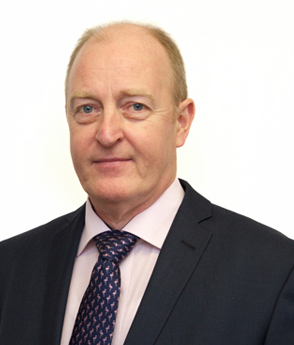
Hugh Phelan — Notary Public Cork
Solicitor & Notary Public appointed by the Chief Justice of Ireland. Over 20 years' experience. BCL (UCC), dual-qualified Ireland & England/Wales.
📍 Notary Public Cork — Hugh Phelan
Need a Notary Public in Cork? Hugh Phelan is a Solicitor & Notary Public appointed by the Chief Justice of Ireland, based at East Douglas Street, Douglas, Cork. Same-day appointments available.
Looking for a Notary Public in Cork?
Hugh Phelan — Solicitor & Notary Public, East Douglas Street, Douglas, Cork.
Book Your Appointment📞 +353-21-489-7134 · East Douglas Street, Douglas, Cork
Also see: Cork Notary Public