
Ireland's start-up ecosystem is thriving, with Cork playing an increasingly prominent role. Whether you are building a SaaS company, a biotech venture, a fintech start-up, or a deep tech business, the moment you look beyond Ireland's borders — for customers, investors, partners, or talent — you will likely encounter the need for notarised documents. This guide explains what you need to know.
When Start-Up Founders Need Notarisation
As a start-up founder, you may need notarised documents for a range of situations. Here are the most common:
1. Incorporating Abroad
Many Irish start-ups incorporate a subsidiary in the United States — often in Delaware — to access the US market, raise US venture capital, or participate in US accelerator programmes such as Y Combinator or Techstars. Setting up a US entity from Ireland typically requires:
- Notarised copies of your Irish company's incorporation documents
- Notarised passport copies of directors and founders
- Notarised board resolutions authorising the formation of the US subsidiary
- Powers of Attorney appointing a US-based registered agent
Similar requirements apply when incorporating in other jurisdictions such as Singapore, the UAE, or EU member states.
2. Raising International Investment
When raising investment from foreign venture capital firms, angel investors, or institutional investors, notarised documents may be required for:
- Share subscription agreements — particularly when investors are based in jurisdictions that require notarised documents
- Shareholder agreements — notarised copies may be needed for filing in foreign corporate registries
- Board resolutions — authorising the issuance of new shares
- Due diligence documents — notarised copies of incorporation documents, financial statements, and IP ownership records
3. International IP Protection
Start-ups with innovative technology need to protect their intellectual property internationally. This requires:
- Notarised Powers of Attorney for patent agents in foreign jurisdictions
- Notarised patent assignments (if IP was initially held by founders personally)
- Notarised declarations of inventorship
- Notarised trademark applications for international markets
4. Opening Foreign Bank Accounts
Setting up bank accounts in other jurisdictions — whether for a subsidiary or simply to receive payments — often requires notarised identity documents and corporate documentation. Banks in the US, UK, Singapore, and many other jurisdictions commonly request:
- Notarised copies of passports for all directors and beneficial owners
- Notarised copies of company incorporation documents
- Notarised board resolution authorising the opening of the account
5. Visa and Immigration Documents
If founders or key employees need to travel to or relocate to another country for business, notarised documents may be required for visa applications. Common requirements include:
- Notarised copies of educational qualifications
- Notarised employment or self-employment verification
- Notarised financial statements
- Notarised character references or police clearance applications
Cork's Start-Up Ecosystem
Cork's start-up scene has grown significantly in recent years, supported by organisations such as Cork Chamber, Enterprise Ireland, the Local Enterprise Office, and incubation centres at University College Cork (UCC) and Munster Technological University (MTU). The city hosts a range of co-working spaces, accelerator programmes, and networking events that foster entrepreneurship.
As these Cork-based start-ups grow and look to international markets, the need for professional notary services grows with them. Having a local, experienced notary who understands the start-up context can save founders significant time and hassle.
Watch: Hugh Phelan — Notary Public, Douglas, Cork
The Apostille: Making Documents International
After notarisation, most documents destined for use abroad need an apostille from the Department of Foreign Affairs. The apostille is an international authentication certificate under the Hague Convention of 1961, and it is recognised in over 120 countries. The process is:

- Document is notarised by Hugh Phelan in Cork
- Notarised document is sent to the Department of Foreign Affairs in Dublin
- The Department issues an apostille (standard: 3–5 working days; express: same-day in Dublin)
- The apostilled document is ready for international use
Practical Tips for Founders
- Plan ahead — do not leave notarisation to the last minute. Factor in at least one week for notarisation and apostille
- Check requirements early — ask your lawyer, investor, or foreign agent exactly what documents need to be notarised and in what format
- Bring proper ID — a valid passport is the preferred form of identification for notarisation
- Company authority — if you are signing on behalf of a company, bring a board resolution or other evidence of your authority to sign
- Multiple copies — if you need notarised documents for multiple jurisdictions, get multiple copies notarised in one appointment
- Keep records — maintain a log of what documents have been notarised and for which purpose
Why Hugh Phelan
Hugh Phelan holds a BCL from University College Cork and a Diploma in Notarial Law. He is appointed by the Chief Justice of Ireland and is dual-qualified in both Ireland and England & Wales. As both a Solicitor and Notary Public, he can provide integrated legal and notarial advice — particularly valuable for start-up founders navigating international requirements for the first time.
His office on East Douglas Street, Douglas, Cork offers flexible scheduling to accommodate the often unpredictable timelines of start-up life.
Contact Hugh Phelan
Ready to get your start-up documents notarised? Contact Hugh Phelan to arrange an appointment.
Call: 021-489-7134 | Email: info@phelansolicitors.com | Book an appointment online
📚 Related Guides
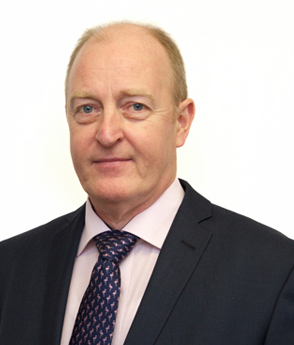
Hugh Phelan — Notary Public Cork
Solicitor & Notary Public appointed by the Chief Justice of Ireland. Over 20 years' experience. BCL (UCC), dual-qualified Ireland & England/Wales.
📍 Notary Public Cork — Hugh Phelan
Need a Notary Public in Cork? Hugh Phelan is a Solicitor & Notary Public appointed by the Chief Justice of Ireland, based at East Douglas Street, Douglas, Cork. Same-day appointments available.
Also see: Notary Cork City