
At its core, notarisation is about trust. In domestic legal systems, trust is built through shared institutions, common courts, and familiar regulatory frameworks. But in international transactions — where two parties may operate under entirely different legal systems, languages, and cultural norms — how do you establish trust? The answer, refined over centuries, is the notary public: an independent, qualified professional whose authentication is recognised across borders.
The Trust Problem in International Transactions
Consider a simple example: a Cork business needs to provide corporate documents to a partner in Japan. The Japanese company has no way to independently verify that:
- The Irish company actually exists and is properly registered
- The person signing the documents has authority to do so
- The documents are genuine and have not been altered
- The signatures are authentic
Without some mechanism for trust, international commerce would be extremely difficult. Notarisation, combined with apostille, provides this mechanism — a chain of verification that both parties can rely on.
Historical Roots
The notarial profession is one of the oldest in the legal world. Its origins trace back to the Roman Empire, where notarii were scribes who recorded official acts. The modern notary public emerged in medieval Europe, where the growth of international trade created a need for documents that would be trusted across borders.
In Ireland, the office of notary public derives from ecclesiastical origins and is now regulated under the jurisdiction of the Chief Justice. Notaries public in Ireland are appointed by the Chief Justice and hold office for life, reflecting the gravity and permanence of the role.
Watch: Hugh Phelan — Notary Public, Douglas, Cork
The Hague Apostille Convention
The 1961 Hague Convention Abolishing the Requirement of Legalisation for Foreign Public Documents created the apostille system — a standardised method of authenticating documents for international use. Before the Convention, documents had to go through a complex chain of legalisation involving multiple government departments and embassies. The apostille simplified this to a single certificate.

The Convention now has over 120 member states, meaning an Irish notarial act, authenticated with an apostille from the Department of Foreign Affairs, is recognised in countries from Albania to Zimbabwe.
Why Not Just Use Technology?
In an age of digital signatures, blockchain verification, and AI-powered document analysis, why does the centuries-old practice of notarisation persist? Several reasons:
- Human judgement: Technology can verify a signature match but cannot assess whether the person signing understood the document, was acting voluntarily, or had mental capacity
- Cultural acceptance: Legal systems worldwide recognise notarisation — changing this would require coordinated international agreement
- Fraud resistance: Physical seals, watermarked paper, and in-person verification are harder to defeat remotely than digital systems
- Legal certainty: The notary's protocol provides an independent record that can be verified years or decades later
- Accountability: The notary is personally and professionally liable for their acts — technology has no such accountability
Trust in Different Legal Systems
The role of the notary varies significantly between legal traditions:
- Civil law systems (France, Germany, Spain, Italy): The notary plays a central role in legal transactions, particularly property transfers and corporate acts. The notary is often responsible for the legal validity of the transaction itself
- Common law systems (Ireland, UK, Australia, US): The notary's role is primarily authentication — verifying identity, witnessing signatures, and certifying copies. The legal substance of the transaction is handled by solicitors
- Mixed systems: Some jurisdictions combine elements of both approaches
Understanding these differences is important when preparing documents for use in another country. A Cork notary with international experience knows what each system expects.
The Emotional Dimension
Trust has an emotional component that is often overlooked in legal analysis. When a person signs a document before a notary, the formality of the occasion — the seal, the signature, the professional setting — reinforces the gravity of what they are doing. This psychological impact serves a practical purpose:
- People take the document more seriously when the signing is formal
- The presence of an independent witness discourages fraud
- The recipient of the document feels greater confidence in its authenticity
- Disputes are less likely when both parties know the document was properly authenticated
Contact Hugh Phelan
Hugh Phelan, Solicitor and Notary Public in Douglas, Cork, brings both legal expertise and notarial authority to every document he handles. Appointed by the Chief Justice of Ireland, with a BCL from UCC and dual qualification in Ireland and England & Wales, Hugh ensures your documents carry the trust and authenticity that international transactions demand.
Contact us at 021-489-7134 or info@phelansolicitors.com, or book an appointment online.
📚 Related Guides
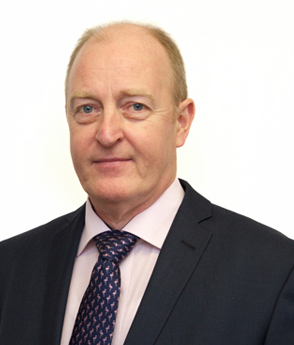
Hugh Phelan — Notary Public Cork
Solicitor & Notary Public appointed by the Chief Justice of Ireland. Over 20 years' experience. BCL (UCC), dual-qualified Ireland & England/Wales.
📍 Notary Public Cork — Hugh Phelan
Need a Notary Public in Cork? Hugh Phelan is a Solicitor & Notary Public appointed by the Chief Justice of Ireland, based at East Douglas Street, Douglas, Cork. Same-day appointments available.
Need Trusted Document Authentication?
Hugh Phelan is a Solicitor & Notary Public appointed by the Chief Justice of Ireland.
Book an Appointment📞 +353-21-489-7134 · East Douglas Street, Douglas, Cork
Also see: Cork Notary Public