
Whether you're emigrating, buying property abroad, setting up a business overseas, or applying for a foreign visa, you will likely need to get one or more documents certified for use in another country. The process can seem confusing at first — there are different levels of certification, and the requirements vary depending on the destination country. This guide breaks down everything you need to know about getting documents certified for foreign use from Ireland.
Understanding Document Certification
When a foreign authority asks you to "certify" a document, they typically mean one of three things, each representing a different level of authentication:
- Certified copy: A solicitor or Commissioner for Oaths confirms that a photocopy is a true copy of the original document. This is the most basic level and is mainly accepted for domestic Irish purposes.
- Notarised document: A Notary Public authenticates the document with their official seal and signature. This carries international recognition and is accepted by most foreign authorities.
- Apostilled or legalised document: An additional layer of authentication provided by a government authority, verifying that the notary's seal is genuine. This is the highest level of certification.
Most foreign authorities require at least notarisation, and many require an apostille or embassy legalisation on top of that. The specific requirements depend on the destination country and the type of document.
Types of Document Certification Explained
Certified Copy
A certified copy is made when a solicitor, Commissioner for Oaths, or other authorised person examines the original document alongside a photocopy and stamps or endorses the copy to confirm it is a true copy of the original. This is the quickest and least expensive form of certification, but it has limited international acceptance.
Notarised Copy or Document
Notarisation involves a Notary Public — a legal professional appointed by the Chief Justice of Ireland — authenticating a document with their official seal and signature. The notary verifies the signatory's identity, witnesses the signature (or confirms a copy is a true copy), and prepares a notarial certificate. Notarised documents carry international recognition because the office of Notary Public is recognised in virtually every legal system worldwide.
Apostille
An apostille is a standardised certificate issued under the Hague Convention of 1961 (the "Apostille Convention"). In Ireland, apostilles are issued by the Department of Foreign Affairs. The apostille verifies the authenticity of the notary's seal and signature, creating a chain of trust that is recognised in all 125+ member states of the Hague Convention.
Consular Legalisation
For countries that are not members of the Hague Convention, a different process called consular legalisation is required. This involves having the document authenticated by the embassy or consulate of the destination country in Ireland (or in some cases, by the Irish Department of Foreign Affairs first, followed by the relevant embassy).
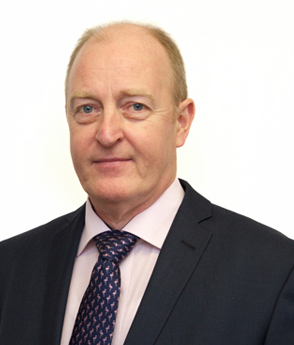
Watch: Hugh Phelan — Notary Public, Douglas, Cork
The Notarisation Process
Getting a document notarised in Cork involves the following steps:
- Contact the notary's office — Explain what documents you need notarised and for which country. This allows the notary to advise you on specific requirements.
- Book an appointment — While some notaries offer walk-in services, booking ensures you receive dedicated attention. Hugh Phelan offers same-day appointments when available.
- Bring the right documents — Bring the original document(s) (unsigned if you need to sign in front of the notary), valid photo ID (passport preferred), proof of address, and any instructions from the requesting party.
- Attend the appointment — The notary will verify your identity, review the documents, witness your signature if required, and apply their notarial seal and signature.
- Receive your notarised documents — The notary will return the completed documents, which are now ready for apostille or legalisation if required.
Getting an Apostille in Ireland
After notarisation, if your document needs to be used in a Hague Convention country, you will need an apostille from the Department of Foreign Affairs. The process is as follows:
- Submit the notarised document to the Authentication Unit of the Department of Foreign Affairs
- Applications can be made in person at the Dublin office, by post, or in some cases online
- The standard processing time is 3–5 working days by post
- An express service is available for urgent matters (same day or next day)
- The current fee is approximately €40 per apostille for standard service
Hugh Phelan can advise you on the apostille process and help ensure your documents are prepared correctly for submission. For more details, see our services page.
Embassy Legalisation for Non-Hague Countries
If your document is destined for a country that is not a member of the Hague Convention, you will need to have it legalised by the embassy or consulate of that country. The process typically involves:
- Having the document notarised by a Notary Public
- Having the notarised document authenticated by the Department of Foreign Affairs
- Submitting the authenticated document to the relevant embassy or consulate for legalisation
This process can take longer than the apostille route, as each embassy has its own processing times and requirements. Countries that commonly require embassy legalisation include the UAE, China, Saudi Arabia, and Qatar.
Common Documents That Need Certification for Foreign Use
- Passports and identity documents — Certified copies for visa applications, immigration, and employment abroad
- Birth, marriage, and death certificates — For immigration, inheritance, property transactions, and family law matters
- Educational qualifications — Degree certificates, transcripts, and professional qualifications for study or work abroad
- Powers of Attorney — Authorising someone to act on your behalf in property, business, or legal matters abroad
- Corporate documents — Board resolutions, certificates of incorporation, and shareholder documents for international business
- Affidavits and statutory declarations — Sworn statements for use in foreign legal proceedings
- Medical reports and police clearance certificates — For immigration and employment applications
Quick Reference: Step-by-Step Process
- Check the requirements — Confirm with the requesting party exactly what level of certification they need
- Determine if the destination country is a Hague Convention member — This determines whether you need an apostille or embassy legalisation
- Have the document notarised — Visit a Notary Public such as Hugh Phelan in Cork
- Obtain an apostille or embassy legalisation — Submit the notarised document to the Department of Foreign Affairs and/or the relevant embassy
- Send or present the completed document — Your document is now ready for use in the destination country
Get Your Documents Certified in Cork
Hugh Phelan, Solicitor and Notary Public, provides a comprehensive document certification service from his office in Douglas, Co. Cork. Whether you need a single document notarised or a full set of documents certified, apostilled, and prepared for use abroad, Hugh can guide you through the process efficiently and professionally.
Contact us today at 021-489-7134 or info@phelansolicitors.com, or book an appointment online.
📚 Related Guides
Hugh Phelan — Notary Public Cork
Solicitor & Notary Public appointed by the Chief Justice of Ireland. Over 20 years' experience. BCL (UCC), dual-qualified Ireland & England/Wales.
📍 Notary Public Cork — Hugh Phelan
Need a Notary Public in Cork? Hugh Phelan is a Solicitor & Notary Public appointed by the Chief Justice of Ireland, based at East Douglas Street, Douglas, Cork. Same-day appointments available.
Looking for a Notary Public in Cork?
Hugh Phelan is a Solicitor & Notary Public appointed by the Chief Justice of Ireland. Same-day appointments available.
Notary Public Cork — Book Now📞 +353-21-489-7134 · East Douglas Street, Douglas, Cork
Also see: Cork Notary Public