
The title "Notary Public" exists in many countries around the world, but the profession varies enormously from one legal system to another. A Notary Public in Ireland is a very different professional from a Notary Public in the United States, and both differ from a notaire in France or a Notar in Germany. Understanding these differences matters — especially when you are having documents authenticated for use in another country.
The Irish Notary Public
- Appointed by: The Chief Justice of Ireland — a commission for life
- Qualifications: Must hold a law degree and the Diploma in Notarial Law and Practice; most are also qualified Solicitors
- Role: Authenticating documents for international use — witnessing signatures, certifying copies, administering oaths, preparing notarial acts
- Powers: Documents bearing the Irish notarial seal are recognised worldwide; can be apostilled for use in 125+ countries
- Number: Limited; only a few hundred in the entire country
- Regulation: Faculty of Notaries Public in Ireland
The UK Notary Public
- England & Wales: Appointed by the Court of Faculties of the Archbishop of Canterbury (historically); must hold the Postgraduate Diploma in Notarial Practice from UCL. Similar to Irish notaries in function.
- Scotland: Notaries are practising solicitors who have been admitted as notaries by the Court of Session. Their powers are defined by Scottish law and differ in some respects from English and Irish notaries.
- Role: Similar to Irish notaries — primarily authenticating documents for international use
- Note: Hugh Phelan is dual-qualified in Ireland and England & Wales, which is advantageous for cross-border matters
Watch: Hugh Phelan — Notary Public, Douglas, Cork
The US Notary Public
This is where the biggest difference lies. A US Notary Public is fundamentally different from an Irish or European notary:
- Appointed by: State government (usually the Secretary of State)
- Qualifications: Minimal — in many states, almost anyone over 18 with a clean record can become a notary after a short training course
- Role: Very limited — witnessing signatures, administering oaths, certifying copies
- Powers: Cannot provide legal advice; cannot draft documents; cannot authenticate documents in the way an Irish notary can
- Number: Over 4 million in the United States
- Term: Usually 4–10 years (not for life)
This difference can cause confusion. When a US authority asks for a "notarised" document, they mean something far simpler than what an Irish notary provides. Conversely, when a European or Asian authority asks for notarisation, they expect the full weight of a properly qualified notary's authentication — which an Irish notary provides but a US notary typically cannot.
The Continental European Notary
In civil law countries — which include most of continental Europe, Latin America, and parts of Asia and Africa — the notary holds a much more powerful position:
- France (Notaire): A public officer appointed by the Minister of Justice. Drafts and authenticates contracts (especially property), manages family law matters (inheritance, marriage contracts), and their documents (actes authentiques) have direct evidential value in court. Becoming a notaire requires a master's degree in law plus 2 years of professional training.
- Germany (Notar): Must be a fully qualified lawyer with additional notarial training. Handles property transactions, company formations, and family law. In some German states, notaries work exclusively as notaries; in others, they combine notarial practice with legal practice.
- Italy (Notaio): A public officer who oversees property transfers, company formations, and other significant transactions. The notaio reads the entire transaction document aloud to the parties and ensures all legal requirements are met. Competition for notarial positions is intense — the notarial exam is one of the most difficult in Italian law.
- Spain (Notario): Similar to the Italian model. Property transactions must be completed before a notario. They also handle wills, company formations, and powers of attorney.
Why This Matters for Your Documents
Understanding these differences is important because:
- When a French notaire asks for a notarised document, they expect a document authenticated by a professional of comparable standing — which an Irish Notary Public is
- When a US authority asks for notarisation, the requirements may be simpler, but an Irish notarial authentication will always be accepted (it exceeds US requirements)
- An Irish notarial document bearing an apostille is recognised in all Hague Convention countries regardless of their notarial tradition
Hugh Phelan — Dual-Qualified in Ireland and England & Wales
Hugh Phelan is uniquely positioned as a dual-qualified Solicitor and Notary Public in both Ireland and England & Wales. This means he understands both the Irish and English notarial systems — an advantage for clients dealing with cross-border matters, particularly post-Brexit.
Contact us at 021-489-7134 or info@phelansolicitors.com, or book an appointment online.
📚 Related Guides
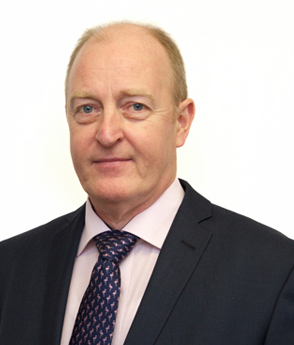
Hugh Phelan — Notary Public Cork
Solicitor & Notary Public appointed by the Chief Justice of Ireland. Over 20 years' experience. BCL (UCC), dual-qualified Ireland & England/Wales.
📍 Notary Public Cork — Hugh Phelan
Need a Notary Public in Cork? Hugh Phelan is a Solicitor & Notary Public appointed by the Chief Justice of Ireland, based at East Douglas Street, Douglas, Cork. Same-day appointments available.
Looking for a Notary Public in Cork?
Hugh Phelan — dual-qualified in Ireland and England & Wales. Douglas, Cork.
Book Your Appointment📞 +353-21-489-7134 · East Douglas Street, Douglas, Cork
Also see: Cork Notary Public